
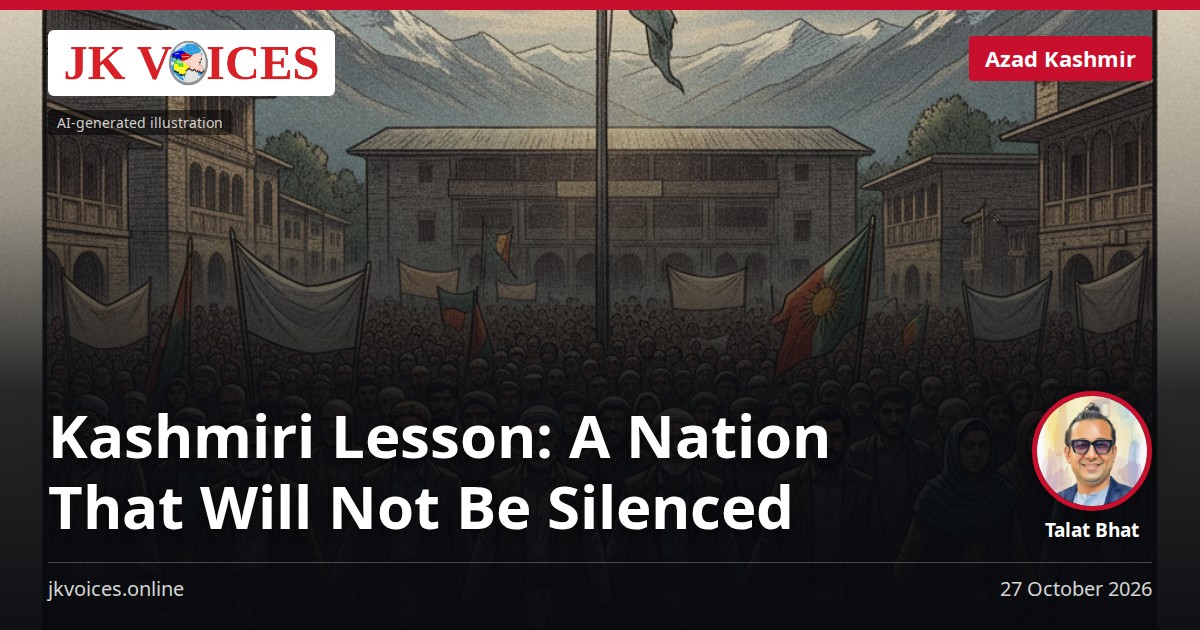
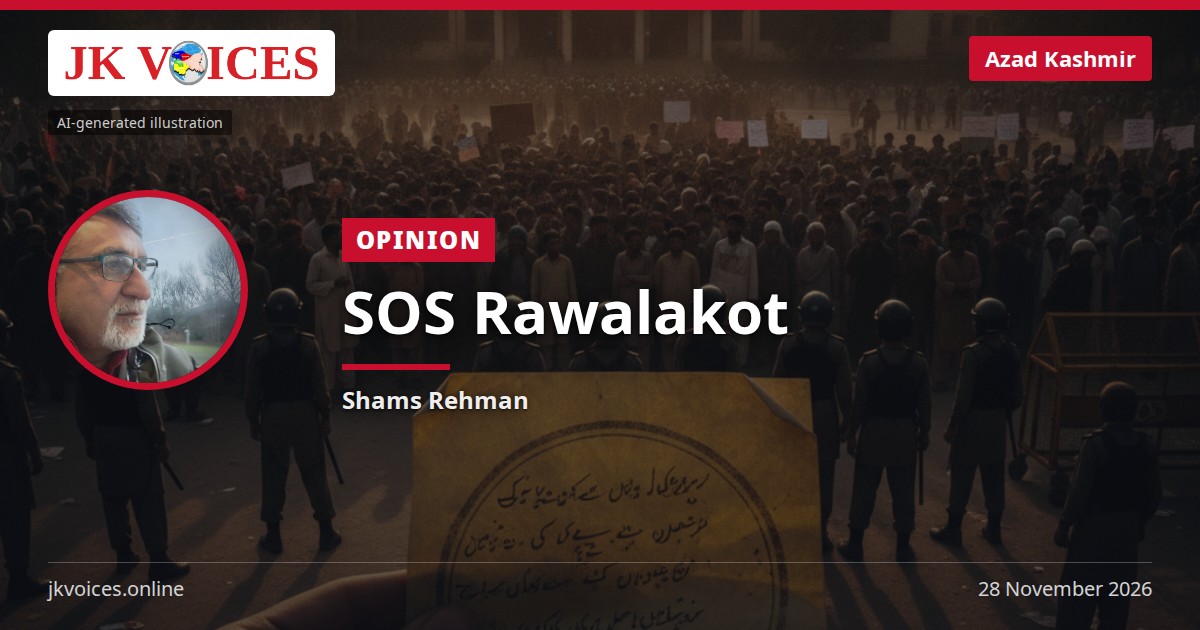
There are moments when a people surprise even those who believed they had them figured out. Watching the Kashmiris of Rawalakot, led by Umar Nazir Kashmiri of the Jammu Kashmir Joint Awami Action Committee, is one of those moments.
This movement did not begin with grand slogans. It began with bread and electricity. Ordinary lawyers, students, traders and civic groups came together in Rawalakot, first protesting the soaring price of wheat, and demanding power tariffs based on the cost of electricity generated by Kashmir's own hydro projects. These are not the demands of conspirators. They are the demands of people tired of paying for what flows from their own rivers.
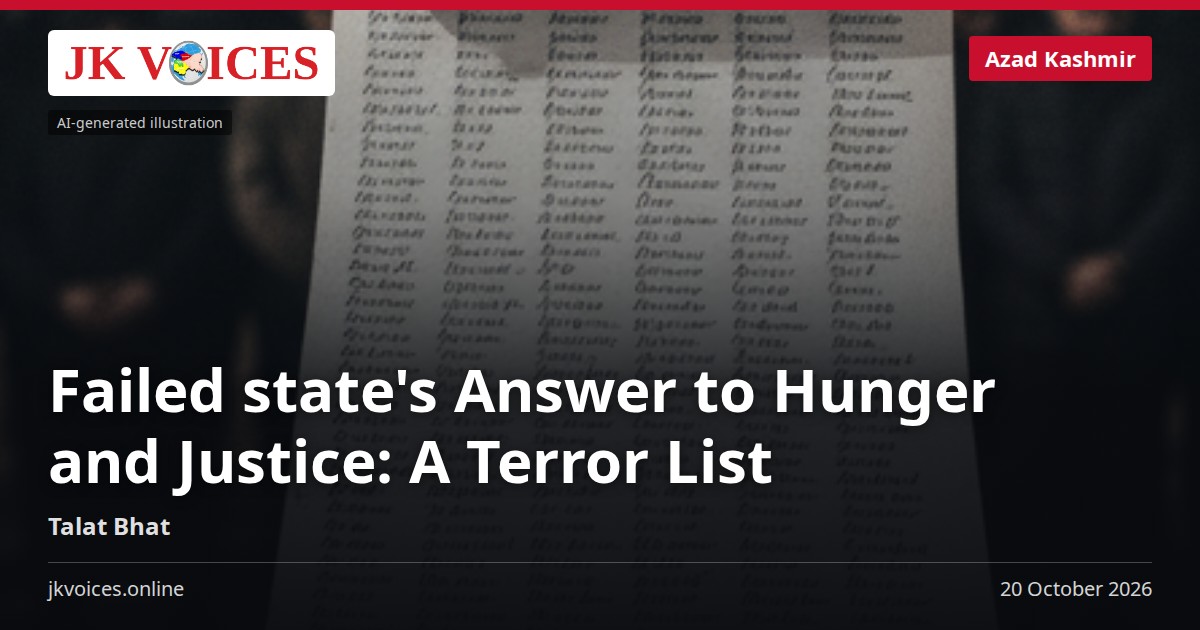
And yet the familiar script was rolled out. They were called anti-state. They were accused of serving a foreign agenda. Officials alleged that armed, India-backed fighters had joined the protesters. On 5 June 2026 the committee was banned as a terrorist organisation under the anti-terrorism act, and its four spokespeople were placed on a wanted list with a reward of $36,000.
The price paid has been heavy. In a night raid to arrest Umar Nazir, his close friend Shahzaib Habib was shot dead and Nazir himself survived a bullet that wounded his ear. During the long march from Rawalakot to Muzaffarabad, more than 50 protesters died, among them Umar Nazir's own brother, Sardar Usman Nazir. Through it all, the message from the ground stayed the same: "We are fighting for our rights. And we will move forward peacefully."
Honest journalism must also record the other side. The AJK government says it has accepted 37 of the committee's 38 demands, and the region's Supreme Court ruled on 7 June that the twelve refugee seats are constitutionally protected and can only be abolished through a constitutional amendment. The movement, for its part, did not start with absolutes: in written proposals in May, it offered to keep symbolic refugee representation, or to replace the twelve seats with four seats in the AJK Council. When people die at protests, the only acceptable answer is an independent inquiry, which Amnesty International has also called for.
The people of Rawalakot have shown that when a people stand firm for their rights, accusations, pressure and smear campaigns cannot silence them.
What no ban could erase was the people's verdict. The committee boycotted the election, and turnout fell to about 48 percent, a drop of 13 points. That silence at the ballot box spoke loudly.
Now there is talk that the new government may consider constitutional changes. It is worth noting that the new Prime Minister, Iftikhar Gilani, has himself written in favour of replacing the twelve separate refugee seats, which would require a constitutional amendment and fresh delimitation. Whether that becomes reform or remains a paper idea, the coming weeks will show.
As a Kashmiri who has lived far from home for almost three decades, I recognise this spirit. Across every part of our divided land, in the Valley, Jammu, Ladakh, Gilgit-Baltistan, Azad Kashmir and the diaspora, Kashmiris have been told who they are and what they may ask for. Again and again, they refuse to be spoken for.
Whatever the outcome, one thing is settled. The people of Rawalakot have shown that when a people stand firm for their rights, accusations, pressure and smear campaigns cannot silence them. They have written a new chapter in the history of protest in Azad Kashmir, and it will not be easy to ignore.
Comments (0)